
Investment property maintenance: follow the water
A Queensland family went overseas for a holiday. While they were away, a twenty-dollar hose under the bathroom sink let go.
It ran for two days. By the time someone opened the front door, water had been through the master bedroom, the ensuite, four more bedrooms, the kitchen, the lounge and the study. The house was gutted and rebuilt. The family was displaced for months. Final bill: more than $500,000.
Source: Suncorp Group, “$20 Part, $30,000 bill: the bursting risk under the sink”, published 15 May 2026
That’s the dramatic version. The one that gets most investors is far quieter – a slow leak nobody reports, eighteen months of it finding the framing, and a repair bill that arrives with no warning and no insurance payout.
Here’s the thing though. Water only gets into a building a handful of ways. If you understand those, you’ve understood ninety per cent of property maintenance. So let’s walk the property together, from the sky down to the slab. Five stops. Half an hour of reading, and you’ll never look at a gutter the same way again.
The rule that matters more than any other
Before we start the walk, one rule.
If you hear the word water, you act today.
Not this weekend. Not at the next routine inspection. A damp patch on a ceiling. A “small stain” in the bathroom. A neighbour mentioning water pools near your back wall after rain. Every one of those is a same-day phone call.
Water damage compounds. A leak that’s been running a fortnight is a plumber. The same leak after eight months is a plumber, a plasterer, a painter, probably a carpenter, and a mould remediation quote you’ll read twice because you assumed there was a typo.
But there’s a sequence people get backwards, and it costs them:
Today – stop the water. Emergency plumber, isolate it, make safe. Do not price-shop this. Paying $400 extra for a same-day callout is not an overpay. It’s a discount on the twelve grand you just avoided.
This week – get your three quotes for the permanent fix. Now you have time. Now you can compare scope, ask why one quote is triple the others, and push back on anything that smells like an upsell.
Speed on the containment. Patience on the repair. That’s it.
Right. Let’s walk.
Stop one – the roof
Start at the top, because that’s where water starts.
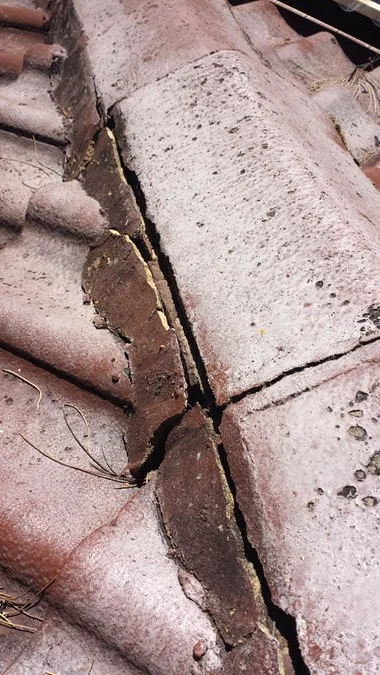
You’ll be told tiles are porous and the roof needs resurfacing. Be a little sceptical. A properly laid tiled roof works by shedding water, not by being waterproof – porosity is rarely what lets water in unless the tiles haven’t been resurfaced for twenty years. The real culprits are:
Ridge capping mortar cracking and falling out
Valley irons rusting through
Cracked, slipped, or previously walked-on tiles
Flashings at chimneys, skylights and wall junctions
No sarking underneath, which turns a small entry point into an internal problem
Cement pointing generally needs attention somewhere between fifteen and twenty-five years, depending on how exposed the roof is. Flexible pointing lasts longer.
Now the part worth remembering: “roof restoration” is one of the most aggressively upsold jobs in the trade. Plenty of owners have paid eight thousand dollars for a full spray-and-seal when nine hundred dollars of ridge capping and valley work was the actual fix. Ask for photographs of the defects before you approve anything. A good roofer hands them over without being asked. A bad one talks about “the whole system”.
Stop two – the gutters and downpipes
Water has now hit the roof and it’s heading for the gutters. This is where most of it goes wrong.
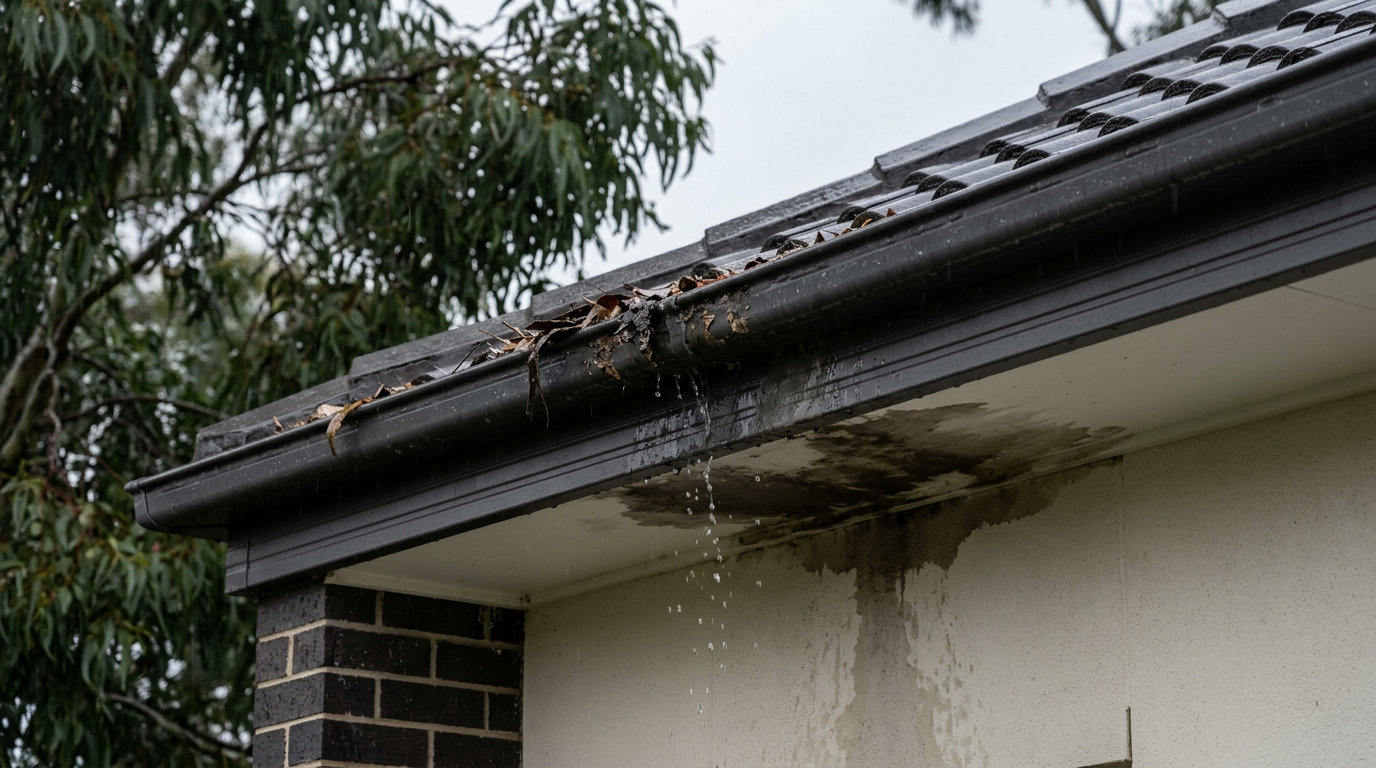
Blocked gutters don’t just overflow off the front. They overflow backwards, under the roofline, into the eaves and down inside the wall cavity. It is the single most common cause of a stained ceiling that has nothing whatsoever to do with the roof.
Clean them annually. Twice a year if there are trees nearby. It’s the cheapest insurance on this page.
And while you’re up there, look at what’s feeding them. Overhanging branches drop enough leaf litter to clog a gutter in one season, and they scrape tiles loose every time it blows. Get them pruned.
Then follow the water all the way out. Clean gutters feeding a blocked downpipe achieves nothing. Where does the water actually discharge? If it’s pooling against the slab or at the base of a wall, you’ve quietly created a foundation problem that will take five years to show up and a lot of money to fix.
Stop three – the ground around the walls
Now we’re at ground level, and this stop is the one nobody checks.
Vegetation touching the building has to go. Any plant against a wall is a bridge – termites walk straight over your barrier and past the inspection zone. Damp foliage against render holds moisture permanently. There should always be a visible gap between the garden and the house.
Check your ground levels. Have garden beds, mulch or a new path been built up above the damp course? Are the weep holes – those small gaps in the brickwork – covered over? This is the classic cause of rising damp, and it’s almost always created by a well-meaning tenant or gardener adding soil. Nobody does it maliciously. Everybody pays for it eventually.
If the house is on stumps or piers, keep the subfloor vents clear. Blocked vents mean trapped moisture, which means rot and a very welcoming environment for termites.
Speaking of which – termite inspections should be annual at minimum, more often in high-risk areas. Notice the pattern, though. Leaking taps, an air conditioner dripping onto the ground, poor drainage against the slab, damp subfloors. Water management is termite management. They’re the same job.
Stop four – the wet rooms
Inside now. This is where the money is.
Flexi hoses
Under every sink, behind the toilet, at the washing machine. Design life is usually quoted at five to ten years, but they fail on condition, not birthdays. Look for rust spots, fraying in the braid, kinks or twists.
The numbers here are hard to ignore. Suncorp reported the average burst flexi hose claim reached around $30,000, up nine per cent in a year, with six per cent of claims topping $100,000. One in ten water damage claims came back to a part you can buy for under twenty dollars. Sixty per cent of owners had never had theirs checked.
Source as above – Suncorp Group, 15 May 2026.
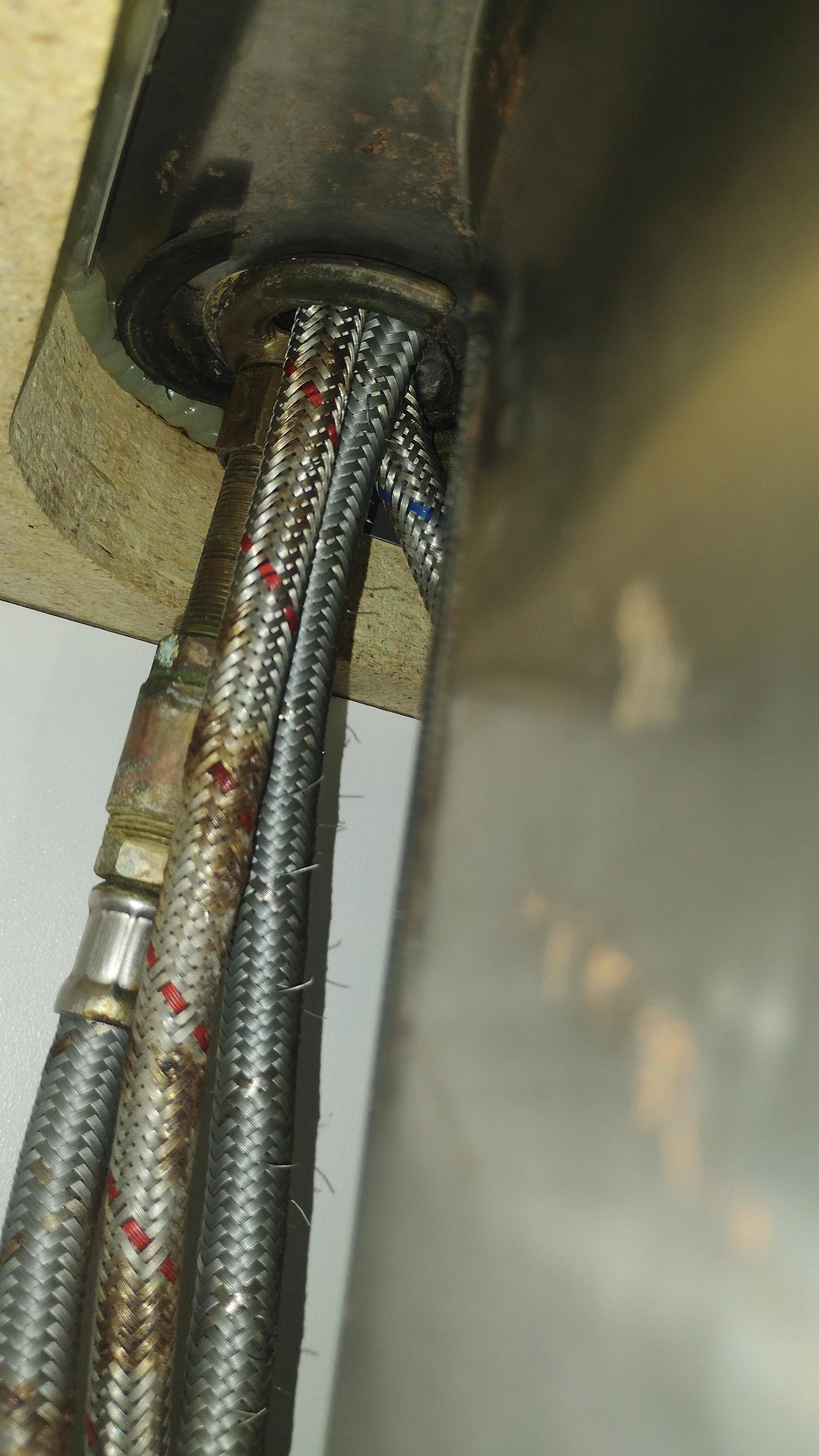
If you don’t know how old yours are, replace them. It’s one plumber’s callout and a handful of parts.
Shower grout and silicone
The waterproofing membrane sits under the tiles. Grout and silicone are what stops water ever reaching a weakness in it. Once grout is cracking or silicone is peeling and going black, water is already getting behind the tiles.
Regrout and reseal a shower: a few hundred dollars. Rebuild a shower after the membrane fails: five figures, plus your tenant needs somewhere to shower for a fortnight, plus you’re replacing the flooring in the next room where the water travelled. This is the highest return-on-effort item in the entire property.

Hot water system
Storage units typically last eight to twelve years and they fail wet. The question that matters is where is it. Roof cavity, internal cupboard, or upstairs means a failure sends water through your ceiling. Check there’s a working safe tray and drain. Past ten years old, plan the replacement rather than waiting for the phone call at 6am.
The two everyone forgets
Air conditioner condensate drains block, back up, and empty into the ceiling. Get it done with the annual service.
Exhaust fans. An extraordinary number of bathroom fans vent straight into the roof cavity instead of outside. All that steam goes up, condenses on the underside of the roof, and drips onto the insulation year after year. Then you get a mould problem and three quotes that all disagree about where the “leak” is.
Stop five – underneath
Last stop, and the slowest-moving one.
Water that reaches the foundations doesn’t announce itself. It shows up as cracking, movement, doors that stop closing properly. And structural work is the one category on this page that gets genuinely expensive.
Two things worth doing:
If there are mature trees and older pipework, get a CCTV drain inspection once. A couple of hundred dollars tells you whether roots have found your sewer line. Old clay pipes are basically an invitation.
Read your building and pest report again. Most investors read it once to decide whether to buy, then never open it again. That’s a waste – it’s the only complete condition assessment your property will ever get, written by someone with no interest in selling you anything.
Go back through it and pull out every line that reads like a warning rather than a defect. “Recommend monitoring.” “Further investigation advised.” “Evidence of previous moisture.” Those aren’t filler. That’s the inspector telling you where this building will fail first. Anything suggesting water reaching the slab or foundations goes straight to the top of your list.
One free trick: next time the property is vacant, turn off every tap and appliance, read the water meter, wait thirty minutes, and read it again. If it’s moved, you have a leak you can’t see. Costs nothing. Finds slab leaks before they find you.
Why all of this is really an insurance story
Here’s the part that ties the whole walk together.
Landlord insurance covers sudden and accidental events. It generally does not cover gradual deterioration, wear and tear, or damage that reasonable maintenance would have prevented. That’s not one insurer’s fine print – it’s a standard exclusion across the market.
So picture the claim. A flexi hose lets go while the property is empty between tenancies. The assessor comes out, picks up the hose, and sees the rust bloom that had been developing for a year. Then they ask when it was last inspected.
“No idea” is a bad answer.
“Here’s the routine inspection report from March, with the photo” is a very good one.
To be fair, insurers do have to justify relying on an exclusion, and these decisions get overturned all the time. But do you want to be right, or do you want to be paid this month? A maintenance paper trail is the cheapest insurance product you’ll ever own, and it costs you nothing beyond asking someone to take a few photos.
Which brings us to who that someone is.
The person doing all this isn’t you
Let’s be honest. You’re not cleaning the gutters. You live in one city and the property is in another, and you have a job.
Every item on this page gets done by your property manager or a trade they book. So the real skill in owning an investment property isn’t maintenance – it’s briefing. Do this once and it runs itself:
Send them this article. Ask them to put the annual items on your property’s calendar and confirm in writing when each is done.
Lift your emergency repair authority. Most management agreements default to around $300. That means at 11pm on a Sunday with water coming through a ceiling, your PM’s job is to ring you for approval instead of ringing a plumber. Set it at $1,000 to $1,500 and let them act.
Ask for photos at every routine inspection. Not a tick-box report. Under the sinks, the shower grout and silicone, the ceilings, the gutters, the external walls. Ninety seconds of their time. That’s your evidence file.
Tell them you want small things reported, not filtered. Some PMs quietly suppress minor issues because they think they’re protecting you from a bill. They’re protecting you from a $300 bill and exposing you to a $10,000 one.
Get the tenant onside through them. A tenant who knows to report a damp patch immediately is your best early warning system. A tenant who thinks they’ll be blamed for it says nothing for a year.
Use the vacancy window. The gap between tenancies is when work gets done properly, without access negotiations. Plan for it rather than treating it as dead time.
If you bought an apartment or townhouse
In strata, some of this isn’t yours – but the consequences still are.
Read the AGM minutes and the capital works fund balance. An underfunded fund means a special levy is coming, and you’ll be paying it.
Know where the boundary sits. Balcony and roof membranes, common walls and shared pipes are typically the owners corporation’s. Your kitchen mixer and your flexi hoses are yours.
Report common property water issues in writing, straight away. In strata disputes, the paper trail decides the outcome. A verbal mention to the building manager is worth nothing eighteen months later.
Watch the balconies. Blocked drainage points and failing membranes leak into the unit below, and that turns into a dispute with three parties and two insurers.
One call to your accountant before you spend
Two things that catch investors out. We’re not accountants, so treat these as questions to ask rather than answers:
Repairs in your first few months are treated differently. The ATO’s long-standing position is that fixing defects that already existed when you bought – “initial repairs” – is capital, not an immediate deduction. So timing matters. Ask before you spend.
Get your depreciation schedule done before your first tax return. A quantity surveyor’s report is a one-off cost that keeps paying for years, and if you’re replacing items, there may be scrapping value in what comes out. Doing the work first and the schedule afterwards leaves money on the table.
And keep every invoice. Capital improvements add to your cost base and reduce capital gains tax when you sell. A shoebox of receipts is worth real money in a decade. A folder in your cloud drive is worth the same and weighs less.
The whole thing on one page
Every year
Gutters cleaned, downpipes and stormwater discharge checked
Termite inspection
Smoke alarm compliance service booked (rules differ by state – let a compliance service carry it)
Vegetation cut back off the building, overhanging branches pruned
Insurance sum insured reviewed against current rebuild cost, not what you paid
Building and pest report re-read
Every routine inspection
Flexi hoses photographed
Shower grout and silicone photographed
Ceilings and cornices checked for staining
Any damp, musty smell or discolouration reported the same day
Every three to five years
Roof inspected and photographed, repaired on evidence not on sales pitch
Drains camera-inspected if there are mature trees or old pipework
Hot water system age reviewed, replacement planned
Any time you hear the word water
Make safe today. Quote the fix this week.
The bit nobody puts in the brochure
Nobody buys an investment property dreaming about ridge capping.
But the arithmetic is stubborn. A few hundred dollars a year protects a seven-figure asset, keeps your insurance claimable, keeps good tenants in place, and means that when you eventually sell, the buyer’s building inspector doesn’t hand them a list of reasons to renegotiate.
The investors who do well over ten years usually didn’t find a magic suburb. They’re the ones whose property still looks after itself in year nine, because somebody was cleaning the gutters in year two.
Forward this to your property manager. Put the annual items in your calendar. Then go and enjoy owning it.
Disclaimer: General information only. This article does not constitute financial, tax, legal or insurance advice and does not take into account your objectives, financial situation or needs. Maintenance obligations, smoke alarm requirements and minimum housing standards differ by state and territory and change over time – confirm current requirements with your property manager or the relevant state authority. Insurance cover, exclusions and claim outcomes depend on your individual policy – review your PDS and speak with your insurer or broker. Speak with a registered tax agent before relying on any tax treatment described above. Premier Buyers is a licensed buyer’s agency and is not an Australian Financial Services Licensee.